
Why Vegetable Farms Are Turning to Robotics

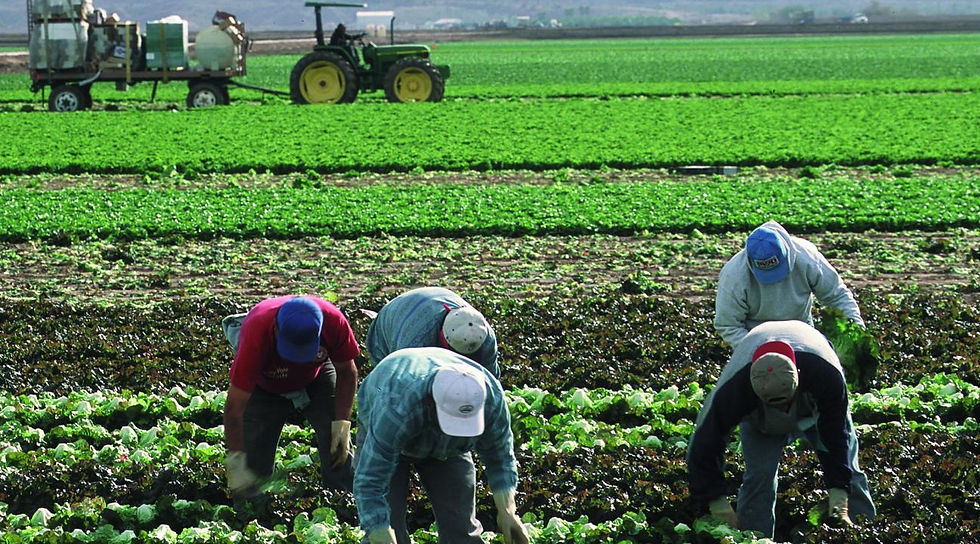
In California’s Central Coast, where rows of lettuce, broccoli, and leafy greens stretch across thousands of acres, a quiet shift is underway. It’s not about what is being grown, but how it’s being harvested.
For decades, vegetable farming has depended on large crews moving through fields by hand, picking at the right moment to preserve quality and maximize yield. That model is now under pressure. Labor is harder to find, more expensive to maintain, and increasingly unpredictable during the most critical weeks of harvest. For growers in regions like Santa Maria and Salinas, where timing is everything, even small disruptions can translate into meaningful losses.
This is the backdrop behind a growing move toward agricultural robotics. Not as a futuristic concept, but as a practical response to an operational reality that is no longer sustainable.
The economics are straightforward. Labor costs continue to rise, while availability tightens. At the same time, vegetable crops remain highly sensitive to timing, requiring precise harvesting windows to maintain quality. The result is a system where risk is concentrated in a single stage of the operation. If harvesting falls behind, the consequences are immediate.
Robotics, powered by advances in artificial intelligence and computer vision, is beginning to change that equation. Modern AI harvesting systems are now capable of identifying produce in real time, assessing ripeness, and executing selective harvesting decisions directly in the field. What was once dependent on manual judgment can increasingly be supported by intelligent, consistent systems.
This shift is particularly relevant for vegetable farms, where harvesting remains one of the most labor-intensive processes. By introducing robotic harvesting, growers are not eliminating labor entirely, but reallocating it. Field crews can be reduced, while remaining workers focus on packing, sorting, and quality control, areas where human oversight continues to add the most value.
In practical terms, this transition can reduce field labor requirements by as much as 50 percent, while improving consistency in output. For growers managing tight margins and unpredictable labor conditions, that level of efficiency is not incremental. It is structural.
What is notable is how quickly the conversation has evolved. Just a few years ago, agricultural robotics was largely viewed as experimental. Today, growers are asking how soon these systems can be deployed, not whether they will work. The urgency is being driven not by technology hype, but by the need for operational stability.
Companies like Beagle Technology Inc. are emerging within this shift by focusing on practical, field-ready solutions. Rather than building for controlled environments, Beagle develops AI-powered vegetable harvesting systems designed to operate in the variability of real farms. The technology integrates directly into existing workflows, enabling growers to adopt automation without reengineering their entire operation.
For California growers, where labor challenges are particularly acute and production scale is high, this type of solution offers a way to maintain output while reducing exposure to labor volatility. It also aligns with a broader trend toward precision agriculture and data-driven farm management, where efficiency and consistency are increasingly tied to long-term competitiveness.
The rise of agricultural robotics, AI harvesting, and automated vegetable harvesting systems is not a passing phase. It reflects a deeper shift in how farms are adapting to economic and operational constraints. As labor conditions continue to evolve, the adoption of robotics is becoming less about innovation for its own sake and more about maintaining viability.
In regions like Santa Maria, where agriculture has long been defined by both scale and precision, the next chapter may be defined by something quieter but just as impactful: machines working alongside people, ensuring that crops are harvested on time, at quality, and with a level of consistency that the old model can no longer guarantee.


Comments